“The female is larger than the male,” our guide whispered, his torchlight settling on a pair of mating thorny stick insects during a night walk along the trails of Mulu National Park.
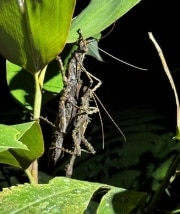 It felt like a small detail in the darkness, but it revealed something much bigger about life in the rainforest. Unlike many animals, the female thorny stick insect dwarfs the male, a striking example of sexual dimorphism. Here, size is survival. The female’s larger body allows her to carry and nourish hundreds of eggs, giving the next generation a stronger chance in an environment where only the most well-adapted survive.
Moments like this are what make Mulu unforgettable. Beneath the towering canopy, every leaf and branch seems alive with creatures perfectly shaped by evolution. From rare plants to well-camouflaged insects hidden in plain sight, Mulu’s rainforest is a living showcase of nature’s quiet ingenuity waiting to be discovered, one step at a time.
Our 4-day forest adventure beckons.
A UNESCO World Heritage Site
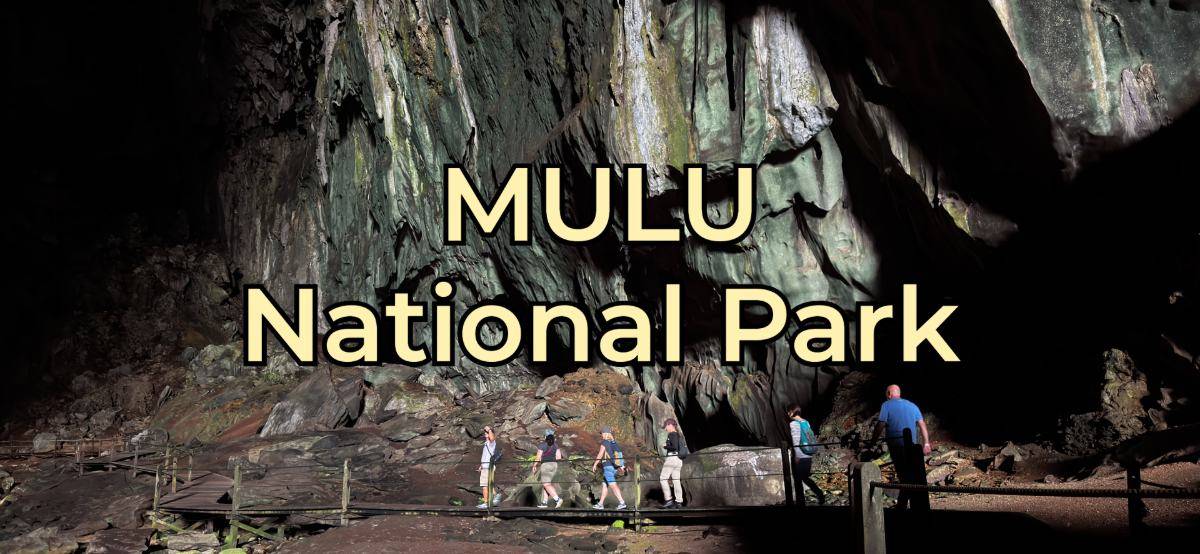
A UNESCO World Heritage site, Gunung Mulu National Park, lies deep within the heart of Sarawak, Borneo. It is renowned for its dramatic limestone pinnacles and some of the largest cave systems on the planet. Spanning over 528 square kilometres, this pristine rainforest is a sanctuary for rare life, where adventure is the only way of life.
Accessible primarily by “wings, water, or walking”, Mulu offers a rare chance to disconnect from the modern world and immerse yourself in nature.
Day 1: Touching Down and Entering the Wild
Our adventure began with a scenic flight from Miri, providing a bird’s-eye view of the vast tropical river systems that weave toward the South China Sea. After arriving at the remote Mulu Airport around midday, we checked into our accommodation, a traditional longhouse-style room that accommodates up to 4 people which costs RM422 (about USD100) per room.
After settling down and doing the checking in formalities, we headed to the Tree Top Tower in the afternoon. This vantage point allows you to climb high above the forest floor to witness the majesty of the rainforest canopy.
As the sun sets, the park transforms.
We joined a guided Night Walk to discover the creatures of the dark. Under the soft glow of torchlight, we spotted some thorny stick insects, geckos waiting for prey, and even a Bornean giant snail with its glistening shell.

Day 2: Treetops, Lang and Deer Caves and the Great Exodus
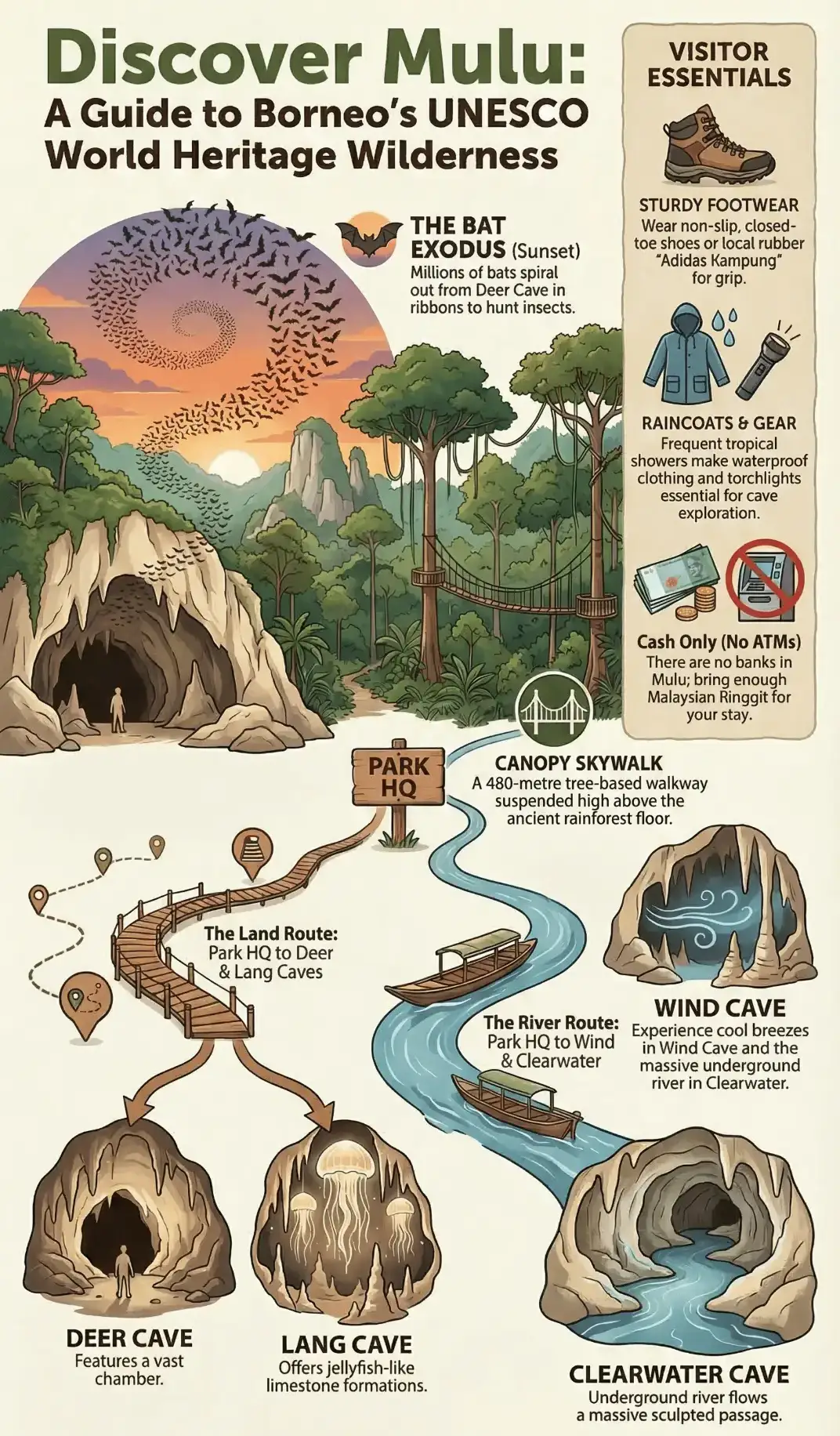
After breakfast at Mulu Cafe, we started the second day lead by a guide to the Canopy Skywalk. Suspended high above the forest floor, this is one of the world’s longest tree-based canopy walks, stretching across 14 exhilarating walkways. It offers a unique perspective of the jungle layers, where sunlight filters through the towering dipterocarp trees.
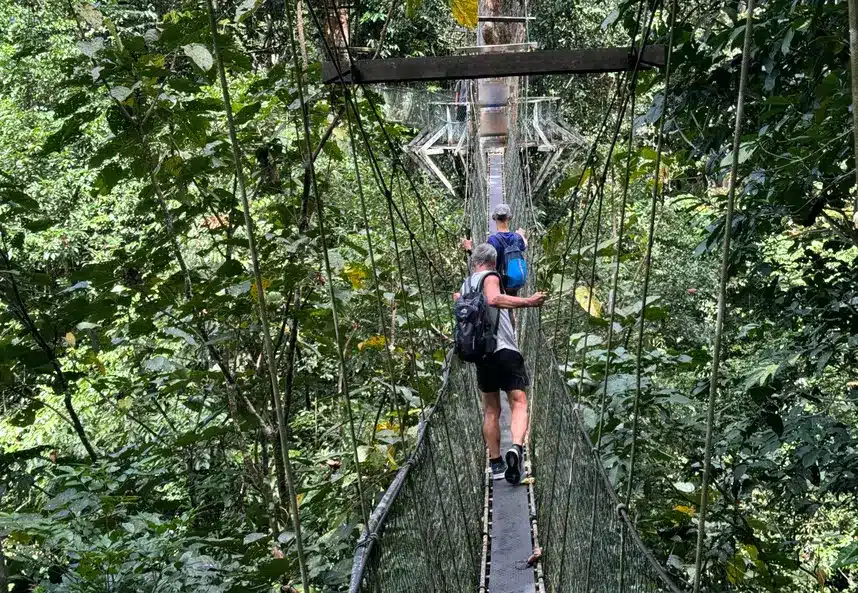
In the afternoon, the focus shifts to Mulu’s legendary limestone hills. Our first stop is Lang Cave, the smallest of the show caves but arguably the most beautiful. It is famously called the “jellyfish cave” due to unique limestone formations that resemble drooping tentacles. Nearby lies the immense Deer Cave, home to one of the largest cave passages on Earth – so vast it could fit several jumbo jets.
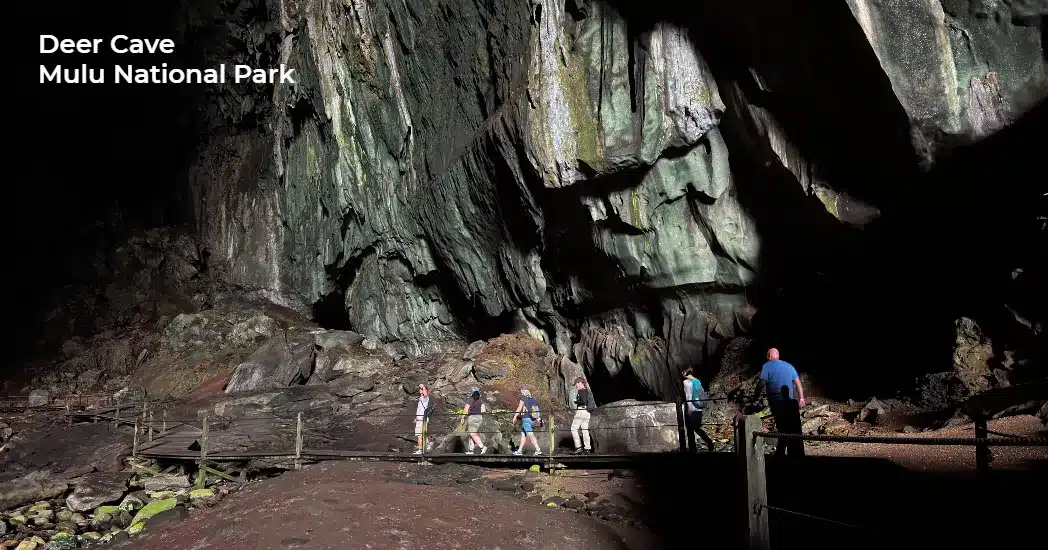
The highlight of the day occurs at dusk: the Bat Exodus. From a dedicated viewing platform, we witnessed millions of wrinkle-lipped free-tailed bats streaming out of the cave in swirling, spiralling ribbons to feed across the rainforest. This unforgettable performance is one of nature’s most incredible sights.
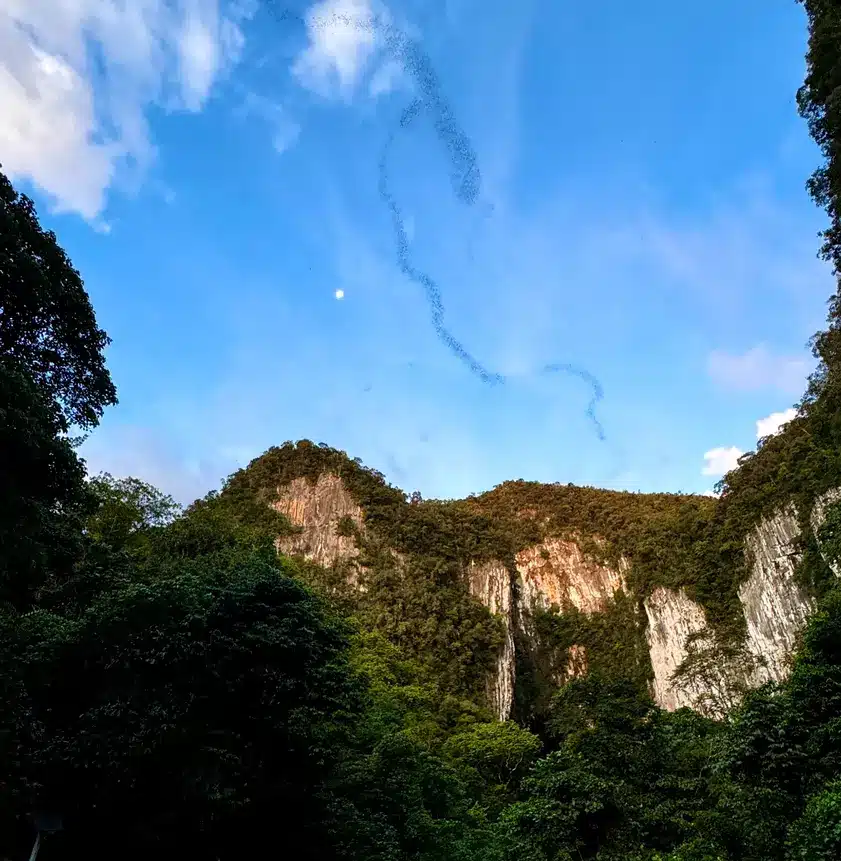
Day 3: River Journeys and Subterranean Wonders
The third day took us onto the water, travelling by longboat along the winding Melinau River. The first stop was the Batu Bungan Handicraft Market, where the local Penan community sells beautifully crafted woven bags and souvenirs.
Continuing upriver, we explored Wind Cave, named for the cool breezes that flow through its narrow passages, decorated with delicate stalactites and stalagmites. A short walk lead us to the spectacular Clearwater Cave, which houses one of the longest underground river systems in the world. Stretching over 200 kilometres the crystal-clear water carved spectacularly beautiful formations over millions of years.
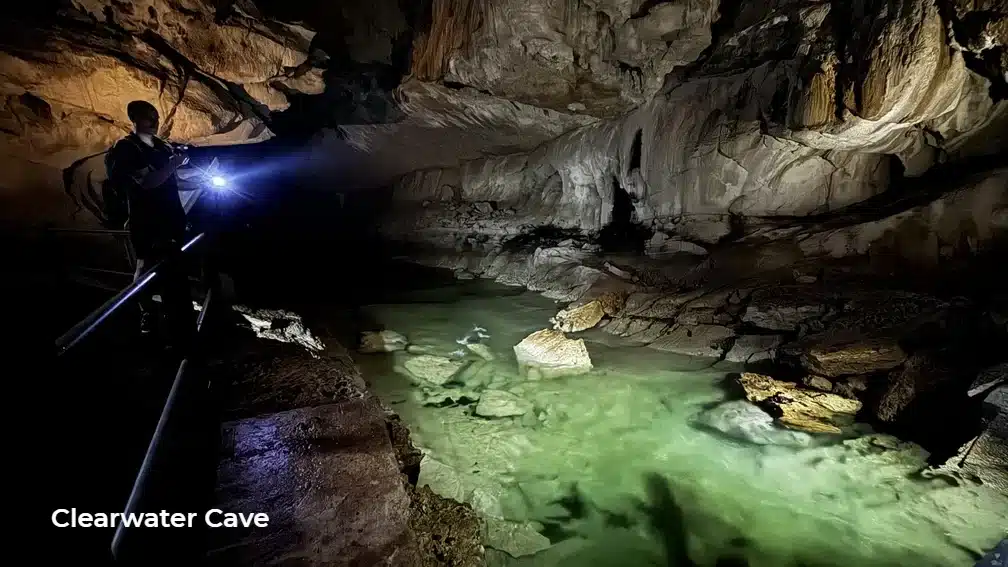
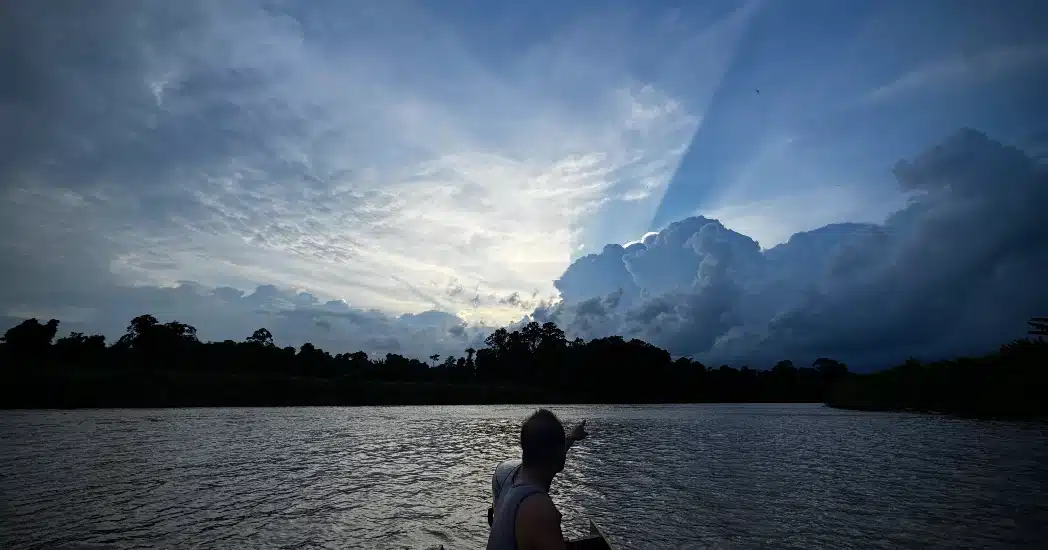
We ended the day on a peaceful sunset cruise, drifting along Mulu’s tranquil waterways. As golden light shimmered across the river, we listened to the jungle slowly settling into the night. The “Summit Vista” cruise became more than just a ride – it was a quiet moment to reflect on the untamed beauty of Borneo.
Day 4: Departure from the Heart of Borneo
On our final morning, we took a slow, lingering breath of the cool rainforest air in Mulu National Park, not quite ready to leave. Over the past few days, we had grown used to the rhythm of the jungle – the calls of wildlife, the stillness of the caves, and the quiet beauty of the fores. And now, it was hard to say goodbye.
As we made our way back for our flight to Miri, there was a mix of gratitude and a quiet sense of longing. We were leaving the rainforest behind, but the experience stayed with us – the towering trees, the hidden worlds beneath the earth, and the feeling of being completely immersed in nature. Mulu was more than just a destination; it was a journey we knew we would carry with us long after we returned home.
Pinnacles and Other Challenging Treks in Mulu National Park
While we explored many of Mulu’s highlights, there are some challenging treks that we didn’t venture, most notably the famous Pinnacles. This trek is a 3-day/2-night expedition that demands a grueling climb up steep, jagged limestone formations, requiring both endurance and determination. It’s a journey for the truly adventurous, far beyond the comfort of boardwalks and guided paths.
The Mt. Mulu Summit Trek (referred to as “The Summit”) is even longer – a 4-day/3-night, 24 km route from park HQ (40 m) up to 2,377 m at the summit. Park guides describe it as “perhaps the most difficult challenge in Mulu,” more strenuous than climbing Mt. Kinabalu.
Though we didn’t take on these challenges this time, it left us with a sense that there’s still more of this immense park waiting to be discovered.
Some Useful Information on Planning Your Trip to Mulu
- Entry Fees: All visitors must purchase a 5-day Park Pass. For foreign adults, the cost is RM 30; for Malaysians, it is RM 15.
- Conservation Fees: Starting 1st February 2026, a conservation fee of RM 20.00 applies to visitors accompanied by guides.
- What to Pack (The Mulu Survival Kit): Mulu has no banks or ATMs, so bring enough cash (RM). Cashless payment can be done using the Malaysian Touch’n’Go app.
- Essential gear includes non-slip footwear (like the famous “Adidas Kampung” rubber shoes), a raincoat, insect repellent, and a torchlight.
- Connectivity: There is no wi-fi. Local data roaming still works but can often be unreliable due to the remote jungle location. It is best to arrange all flight bookings before arrival.
- Weather: Expect tropical rain at any time, which often brings a welcome cool to the humidity.
Sources:
Alternative accommodation is available outside the national park:
• Mulu Marriott Resort & Spa – Mulu Marriott provides free shuttle services to and from Mulu National Park, a 10-min drive away.


- 4-Day Forest & Cave Adventure in Gunung Mulu National Park - March 18, 2026
- Dalat | Vietnam Trip Part 3 - May 4, 2023
- Danang, Hoi An, Hue, My Son | Vietnam Trip Part 2 - May 1, 2023